Best Marine Glue Brands and Selection Guide
Choosing marine adhesive is a critical step that directly impacts the lifespan of a project. In 2025 , D4 class, polyurethane-based options are gaining prominence for both hobbyists and professionals. This guide summarizes the technical criteria to consider when evaluating marine adhesive brands, application tips, and common selection mistakes in a practical way.
10 Criteria to Consider When Choosing Marine Glue
- Strength Class (DIN EN 204): D4 is required if it is outdoors or exposed to water. For indoor use with slight moisture, D3 may suffice, but for boats/wooden exteriors, D4 is preferable.
- Chemical Base: Polyurethane (PU) marine adhesive provides high resistance to water, moisture, and varying weather conditions. Hybrid (MS polymer) products offer flexibility, while epoxy can be an alternative for structural repairs.
- Open Time: The time required to position the components. Longer open times allow for smoother operation with large components or complex assemblies.
- Pressing/Clamping Time: Initial clamping typically takes 20–40 minutes; follow the manufacturer's recommended interval.
- Full Curing Time: Full strength is achieved in approximately 24 hours for most PU products. This time may be longer at low temperatures and low humidity.
- Gap Filling and Foaming: Products that fill gaps by slightly expanding offer an advantage over surface imperfections. Overflow control may be necessary with formulas that foam excessively.
- Color and Aesthetics: Amber/clear drying marine glue camouflages better with wood tones. This is important for visible lines.
- Temperature and Humidity Range: Application and storage are generally between +5°C and +30°C . Viscosity increases and flow decreases in colder temperatures.
- Packaging and Shelf Life: Cartridge/bottle options; small packaging is more sensible for frequent use, while large packaging is better for mass production. Opened products have a shorter shelf life.
- Safety and Certification: Read the safety instructions for isocyanate content. REACH compliance, access to the technical data sheet (TDS) and safety data sheet (SDS) are important indicators of quality.
Which marine adhesive for which project?
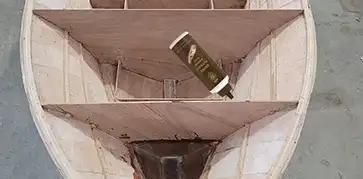
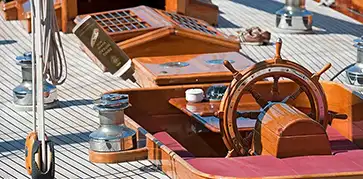
- Boat Hull / Deck: D4 PU, a formula with strong gap-filling capabilities.
- Outdoor Wood (pergola, fence, deck): UV and water resistant D4; transparent/amber preferred for visible joints.
- Furniture Manufacturing/Repair: Medium viscosity, manageable press time formulas; banding for clean overflow.
- Wood-Metal / Wood-Concrete: Surface preparation is critical. Sanding + degreasing + D4 PU combination.
Trends for 2025: What Has Changed?
In 2025, manufacturers are offering PU formulations with lower monomer content and more stable application windows at lower temperatures . Products with controlled gap filling, bearing the phrase "limited growth," are on the rise among users seeking clean workmanship. Additionally , amber-clear drying colors blend better with natural wood tones.
Application Tips (Brief Summary)
- Prepare the surface: Sanding, dusting, and oil/dirt removal are essential.
- A thin layer is sufficient: PU is highly reactive; high adhesion is possible with a small amount of product.
- Apply to both surfaces: For even spreading and a more homogeneous bond.
- Use clamps: Align and secure the parts before the open time expires.
- Wait for it to overflow and then remove it: Once the gel reaches the desired consistency, removing it with a spatula won't leave streaks.
- Respect the curing period: Do not subject to mechanical loads before reaching full strength.
- +5°C ~ +30°C: A safe range for both application and storage.
Security Information (Important)
- Contains isocyanate: May cause skin and eye irritation. Use gloves and goggles.
- Ventilation: Ensure adequate ventilation in enclosed spaces.
- In case of contact: In case of skin contact, wash with soap and water; in case of eye contact, rinse thoroughly with water and seek medical attention.
Common Election Mistakes and Solutions
- Error: Using class D3 outdoors.
Solution: If there is outdoor exposure or water contact, proceed to D4. - Error: Applying too much product (excessive foaming/overflowing).
Solution: Apply pressure with a thin layer and a clamp. - Error: Application in a cold environment.
Solution: Bring the product and materials to room temperature. - Error: Using it without reading the TDS/SDS data.
Solution: Download and save the manufacturer's documentation.
Example Use Case (with Visual Explanation)
- The wooden surfaces to be joined are sanded and cleaned of dust.
- Marine glue is applied to both surfaces in a thin film.
- The parts are aligned and clamped for 25–30 minutes.
- Excess portions are removed with a spatula when the mixture reaches a gel-like consistency.
- Sanding/coating can be done with full strength after 24 hours.
Conclusion: The "Right" Product More Than the "Best" Brand
The " best marine adhesive " is not a brand name, but rather a product selected with the correct strength class , the correct open time , and the correct application conditions . Define your project requirements, review the manufacturer's TDS/SDS documentation, and achieve long-lasting results with a D4 class polyurethane marine adhesive.
The information in this text may vary from time to time depending on the manufacturer. Always check the product label.